




What are the signs of a high-quality supplement?
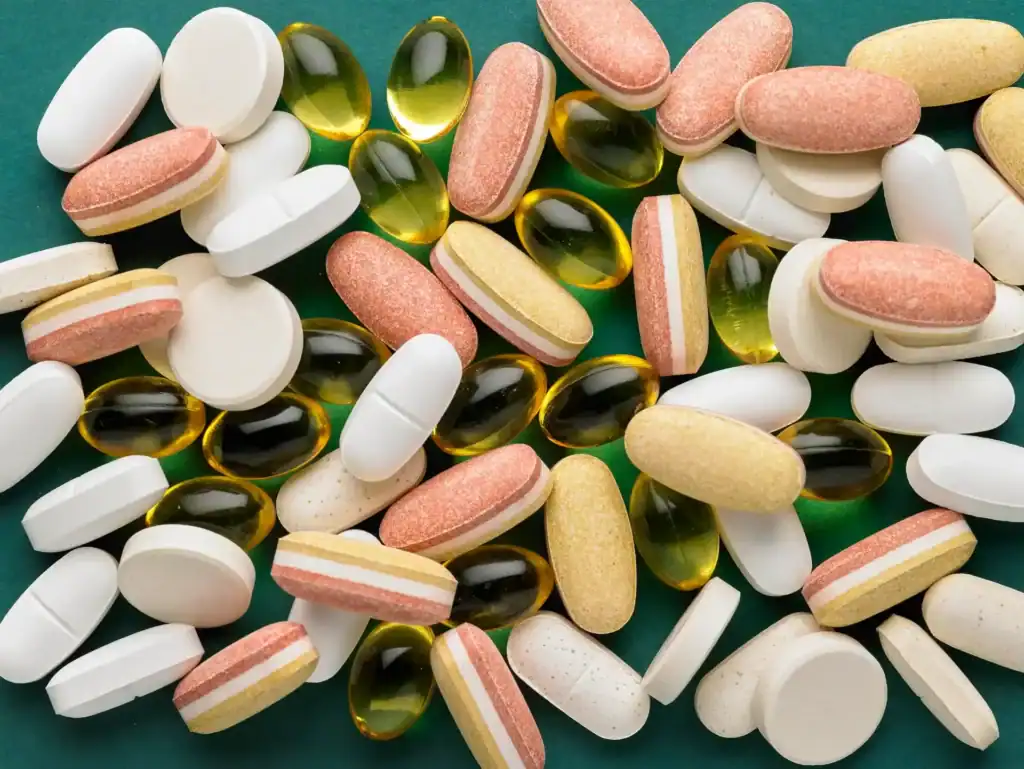
The shelves are packed with supplements: capsules, tablets, sachets, bottles… They all promise well-being, vitality and good health. But how do you make sense of all the different options? What factors should you consider when assessing a product’s quality?
Let’s take a closer look.
Raw materials: where do the active ingredients you take come from?
The EFSA – the European Food Safety Authority – defines food supplements as “concentrated sources of nutrients (minerals and vitamins) or other substances with a nutritional or physiological effect, marketed in the form of a ‘dose’ (e.g. pills, tablets, capsules, measured-dose liquids). Food supplements may contain a wide variety of nutrients and other ingredients, including, but not limited to, vitamins, minerals, amino acids, essential fatty acids, fibre, and various plants and herbal extracts.”
It defines which raw materials they may contain, but it is the details that make the difference when it comes to a supplement’s effectiveness. Not all forms in which vitamins and minerals can be found are equivalent; for example, vitamin B12 in the form of methylcobalamin is natural, more widely used and more bioavailable than forms such as cyanocobalamin, just as iron in the ferrous form (Fe2+) is more so than the ferric form (Fe3+).
Similarly, for botanical substances, it is important that the plants from which the extracts are derived are harvested at their peak, when the concentration of active ingredients is at its highest. It is important to choose the season, the harvesting location and the drying method, as these can have a decisive influence on the final quality of the product.

Another sign of quality is the use of patented raw materials or those backed by rigorous clinical studies, verifiable scientific documentation and controlled production processes. A concrete guarantee of efficacy and safety.
Plant extracts: titration and standardization
When it comes to plant extracts, two key terms determine a product’s true quality: titration and standardization.

A standardized extract is produced using a defined and reproducible method, which ensures that every batch contains the same amount of active ingredients. The titre, on the other hand, indicates the percentage of the active ingredient present in the extract. The higher the titre, the more concentrated the extract; this involves longer or more complex extraction times and higher costs but, for the same quantity of extract used in the product, guarantees greater efficacy.
How manufacturing technology supports efficacy
Formulating a supplement is no simple task: behind every good supplement there is always scientific research. Choosing the right dosage form (tablet, sublingual tablet, capsule, liquid) is a technical decision that has a direct impact on the product’s efficacy.
Some substances, in order to be absorbed properly, must pass through the acidic environment of the stomach unscathed: this is the case with enteric-coated tablets, which ensure that the active ingredient reaches the site of action intact. Other substances require gradual release to be utilized most effectively by the body, avoiding peaks and wastage. Still others benefit from sublingual absorption, which allows for rapid action by bypassing the digestive tract.

The selection of the most suitable technology for each individual formula is, therefore, the result of ongoing investment in research and development, which is essential for optimising the efficacy of each active ingredient.
Patents: a key differentiator

Another factor that sets a high-quality supplement apart is the level of research underpinning its formulation. The presence of supporting clinical and/or in vitro studies and patents is a clear indicator of the scientific commitment behind the product.
Choosing a supplement that has been developed and validated through specific studies means relying on a solution designed and tested to genuinely deliver all the benefits it promises.
Dosages: the quantity that really matters
A common mistake when choosing a supplement is to stop at the list of ingredients without checking the dosages. A product may well contain beneficial active ingredients, but if present in too small a quantity, their presence is merely nominal.
Quality products list daily dosages consistent with what is highlighted in the scientific literature.
It is also worth checking whether the various ingredients have been chosen to work in synergy: certain combinations of substances enhance each other’s effects, amplifying the overall result. This level of formulation requires in-depth knowledge and is not found in all products on the market.

Bioavailability: what the body can actually use
Bioavailability is one of the most important factors to consider when choosing a supplement. It refers to the amount of a nutrient that, once ingested, is actually absorbed and made available to the body. In other words, it is not just how much you take in that matters, but how much the body can actually use.
A supplement may contain excellent ingredients, but if these are not easily absorbed, their potential remains untapped. For this reason, high-quality formulations use highly bioavailable forms, combined synergistically and supported by advanced technologies.
The result is a more effective and targeted delivery, allowing the active ingredients to reach the cells and perform their function to the full.
Ethics and methodology: the company’s commitment goes beyond the product
Quality does not end with the formula. The quality of a supplement also depends on the clarity of the information provided: on the production process, the origin of the raw materials, and the certifications obtained.
Key factors to consider include:
- sustainability. A company’s environmental commitment (from renewable energy to the use of FSC-certified packaging) often reflects a corporate culture that places care at the heart of everything it does, not only in the product itself but also in the way it is manufactured.
- history and ongoing research. Companies with decades of experience in the sector and a constant commitment to scientific research offer an implicit guarantee that is difficult for new entrants to the market to replicate.
Transparency is key: clear labels, precise instructions and comprehensive information enable consumers to make informed choices.
Read also:
Choosing high-quality supplements is a long-term investment
A high-quality supplement is not simply a product: it is the result of research, careful selection and attention to detail at every stage, from the raw materials to the final formulation. And it is precisely this quality that makes all the difference to the results.
We often tend to judge a supplement based on immediate results. However, its true value becomes apparent over time.
A well-formulated product, with high-quality ingredients and correct dosages, works progressively and deeply, providing continuous support for the body.
Wellbeing is a goal that deserves the right tools. And when it comes to wellbeing, the most important question to ask should always be: what quality am I choosing for my body?
The best supplements for every need
The Principium line adopts all these arrangements: a main active at the highest permissible dosages, in synergy with other substances that enhance its effectiveness combined with the best production technologies.